What the fizz actually does
Baking soda is a mild base and kitchen vinegar is a mild acid, usually about 5 percent acetic acid. When they meet they make carbon dioxide gas, water and a little sodium acetate. The foam looks dramatic, but the reaction burns itself out in a minute or two and leaves mostly salty water behind.
That foam can loosen a thin layer of soap scum or fresh grease from the upper wall of a pipe. It does not dissolve hair, it does not break up a wad of paper, and it cannot push a blockage sitting several feet down the line. Think of it as a rinse with bubbles, not a drain cleaner.
The method, done properly
- 1
Remove standing water
Bail out the basin or let it drain as far as it will go. The mixture needs to reach the pipe wall, not float on a pool of gray water.
- 2
Add the baking soda
Pour about half a cup into the drain opening. If it clings to the strainer, push it down with a spoon handle.
- 3
Follow with vinegar and plug the drain
Pour in about a cup of white vinegar, then seal the opening with a stopper or a wet rag. Sealing it sends the foam down the pipe instead of back up into the sink. Wait 15 to 30 minutes.
- 4
Rinse with hot tap water
Run the hot tap for a full minute. Use tap-hot, never boiling, especially on PVC pipe or a porcelain fixture.
What it can clear and what it cannot
Usually helps
- Light soap film in a bathroom sink that drains a little slowly
- A sour or musty smell from a kitchen drain that otherwise flows
- A thin, fresh grease coating in a kitchen branch line
- Monthly upkeep on a drain that already works
Usually does not help
- A full clog from hair, wipes or food packed into the trap
- Roots or a cracked line outside the house
- A toilet that will not flush
- Several fixtures gurgling or backing up at once, which points to the main line
The pattern is simple. If the problem is a coating, a rinse may help. If the problem is a lump, you need something that can reach it and pull it out.
Pipe and septic cautions
Vinegar is an acid, so repeated doses are not kind to old metal fittings, brass connections or the rubber gaskets in a trap. If you see green crust at a joint, flaking rust or a slow drip under the sink, stop adding liquid and look at the hardware first. Houses with galvanized steel drain lines are the ones to be most careful with.
Boiling water is the habit to drop. PVC drain pipe is rated for much less heat than a rolling boil, and a pot of boiling water poured into a cold porcelain sink or tub can crack the fixture. Tap-hot water does the same rinsing job without the risk.
Septic homes need an extra warning. Penn State Extension lists bleach and drain cleaners among household chemicals that may harm the beneficial bacteria in a septic tank and soil absorption area. It also lists fat, grease and cooking oil among wastes that fill a tank early. One cup of vinegar now and then is unlikely to matter, but a chemical opener followed by repeated rounds of fizz is a different story.
Never combine vinegar with bleach or with leftover chemical drain opener under the sink. The mixture can release toxic fumes or throw caustic liquid back at your face. If a store-bought product already sits in the drain, leave it alone and call us instead of adding anything.
Signs it is time to stop and call
Stop the home treatments if you see any of these
- The water has not moved after two rounds of the fizz method
- More than one drain in the house is slow or gurgling
- Water shows up in a floor drain or tub when the washing machine drains
- A sewage smell lingers after you have cleaned the trap
- The same drain slows down again within a week or two
- There are water stains, a drip, or soft wood under the sink
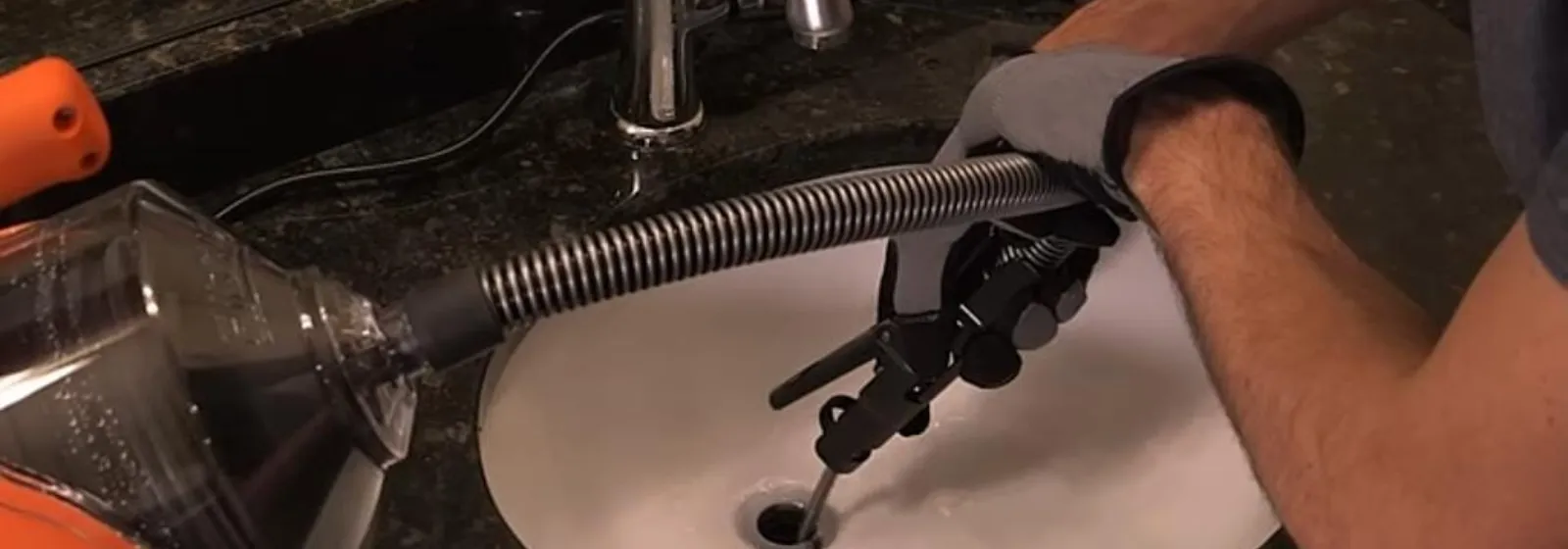
A drain that clogs again and again is telling you something about the line, not about your recipe. Our drain cleaning technicians clear the blockage with cable machines and cameras where needed. When grease or scale keeps rebuilding, hydro jetting scours the pipe wall with high-pressure water so the buildup does not return in a month.
Fizz did not move it?
Stop pouring and call (215) 714-6692. You get a clear price before work starts, and same-day appointments are available when the schedule allows.
A monthly routine that does more than fizz
The cheapest fix is keeping the problem out of the pipe. Put a mesh hair catcher in every shower and tub drain, and empty it weekly. In the kitchen, wipe greasy pans with a paper towel before washing and pour cooled cooking fat into a can for the trash.
A hot tap flush after a sink of dishes helps move soap through the trap before it cools into a film. If you want to use the fizz method as upkeep, once a month is plenty. Doing it more often adds acid to your fittings without adding any benefit.
Garbage disposals deserve their own note. Coffee grounds, rice, pasta and potato peels are common culprits, because they swell or pack down in the trap. Run cold water for ten seconds after the motor stops so the last of the waste clears the first few feet of pipe.
What a professional visit adds
A technician can usually tell in a few minutes if the trouble sits in the trap, a branch line or the main line. That sorting step matters, because a branch clog under one sink and a main clog affecting the whole house need very different tools. A plumber should match the tool to the problem, starting with a simple cable pass when that is enough and moving to a camera or jetting only when the clog points to it.
If you live near the edges of town, our teams also work in Hatboro and Ambler, so a drain call from a neighboring address is routine. We explain the cause in plain words and quote the price before the work begins.
Plumbing in Horsham: sewer or septic comes first
The Horsham Water and Sewer Authority serves about 93 percent of the township's population, so most homes here are on public sewer and a minority are on septic. Check your sewer bill. A sewer line on it means the fizz routine is fair for light upkeep, while no sewer charge means a tank may sit in your yard and chemical openers should stay out of the house.
The Authority's wipes and grease sheet says grease hardens on the inside walls of sewer pipes. That coating is the one thing vinegar and baking soda can touch, so the real fix for a kitchen drain is a can for cooking fat, because no fizz clears a pipe wall that keeps getting recoated.
If you do have a tank, Penn State Extension says pumping every 2 to 3 years is commonly recommended. Ask a septic hauler for your schedule before you decide what goes down the drain.
Questions and answers
Only a very light one. It can loosen a thin film of soap or fresh grease, but it will not dissolve hair, food packed in a trap or a blockage deeper in the line. If the water has not moved after two rounds, a cable machine is the right next step.
Occasional use is fine for PVC and most modern fittings. Old galvanized steel, aging brass parts and worn rubber gaskets do not handle repeated acid well. Never use boiling water on PVC, and keep treatments to about once a month.
A single cup of vinegar now and then is unlikely to hurt, but Penn State Extension warns that bleach and drain cleaners can harm the bacteria a tank depends on. Skip chemical openers entirely and call a plumber for a stubborn clog.
Look at your sewer bill. The Horsham Water and Sewer Authority serves about 93 percent of the township population, so most but not all homes are on public sewer. If you see no sewer charge, call the Authority at (215) 672-8011 with your address to confirm, because the answer decides which products are safe and who is responsible for a problem in the line.
A repeat clog usually means buildup farther down the pipe, a bellied section that holds water, or roots in an older line. A camera inspection shows which one it is. Our drain cleaning team can sort it out, and hydro jetting is the option when grease scale is the cause.
No. Mixing acids with bleach or caustic openers can release toxic fumes or splash dangerous liquid. If a chemical product is already in the drain, do not add anything, wear gloves and eye protection near the sink, and call a plumber.
Sources we checked
Local facts on this page come from these public pages. Plumbing work in Pennsylvania falls under the Uniform Construction Code, which adopts the International Plumbing Code (IPC) provisions, so ask Horsham Code Enforcement which edition applies before a permit is pulled. Rules and phone numbers change, so confirm with the office before you act.
- horshamwater-sewer.com/history Authority report
- horshamwater-sewer.com/sites/default/files/wipes-fog_horsham.pdf Authority report
- extension.psu.edu/five-basic-practices-to-protect-your-septic-... State agency