When a clogged drain is an emergency
Some clogs can wait until morning. Others cannot. Water coming up in the lowest fixture, more than one slow drain, or a toilet that gurgles when the washer drains all point at the main line. The next flush may end up on your floor.
A single slow bathroom sink is a different story. You can bail it, pour nothing down it and schedule a visit. When we pick up the phone at night, the first thing we ask is which fixture is affected and whether anything else is acting up. The answer tells us whether to send a truck now or book the first slot of the day.
Before we arrive: protect the house
These steps take five minutes and keep a bad clog from becoming a flooded floor.
Stop all water use
Do not run the dishwasher, washer or shower. Every gallon you send down has nowhere to go if the main line is blocked.
Do not mix chemicals
Skip the drain opener. It rarely clears a deep clog, and it leaves caustic liquid sitting in the pipe where a plumber's hands and cable will meet it.
Move items off the floor
Lift rugs, boxes and electronics away from the lowest drain in the house, usually in the basement or laundry area.
Note which drains are affected
Tell us which fixtures are slow, gurgling or backing up. A clog in one branch and a clog in the main line need different tools.
Which drain is clogged tells us where the clog sits
Plumbing works like a tree. Small branches from each fixture join larger lines, and those join the main drain that leaves the house. Where the symptoms show up points to where the blockage lives.
One kitchen sink
Cooking grease cools into a paste inside the 1.5 to 2 inch line under the sink. A short cable usually clears it, though a long run to a back wall may need a larger machine.
Bathtub or shower
Hair wound around the stopper or drain strainer is the usual cause. If it returns within weeks, the clog is likely a few feet deeper in the trap.
Toilet that will not clear
A toilet drains through a wider path than a sink. When it gurgles or stays full after plunging, the blockage may be in the line past the toilet, not in the bowl. Our toilet repair team can also check the fixture itself.
Basement floor drain
Water rising here means the main line is full or blocked. Treat it as urgent and keep the washer off.
Washer standpipe
Lint and soap residue build up in the standpipe and the line behind it. Overflow during a spin cycle points to a partial blockage.
Everything slow at once
When tub, sink and toilet all drain poorly together, the clog sits downstream of all of them, in the main drain.
Drain snaking: how we clear the clog
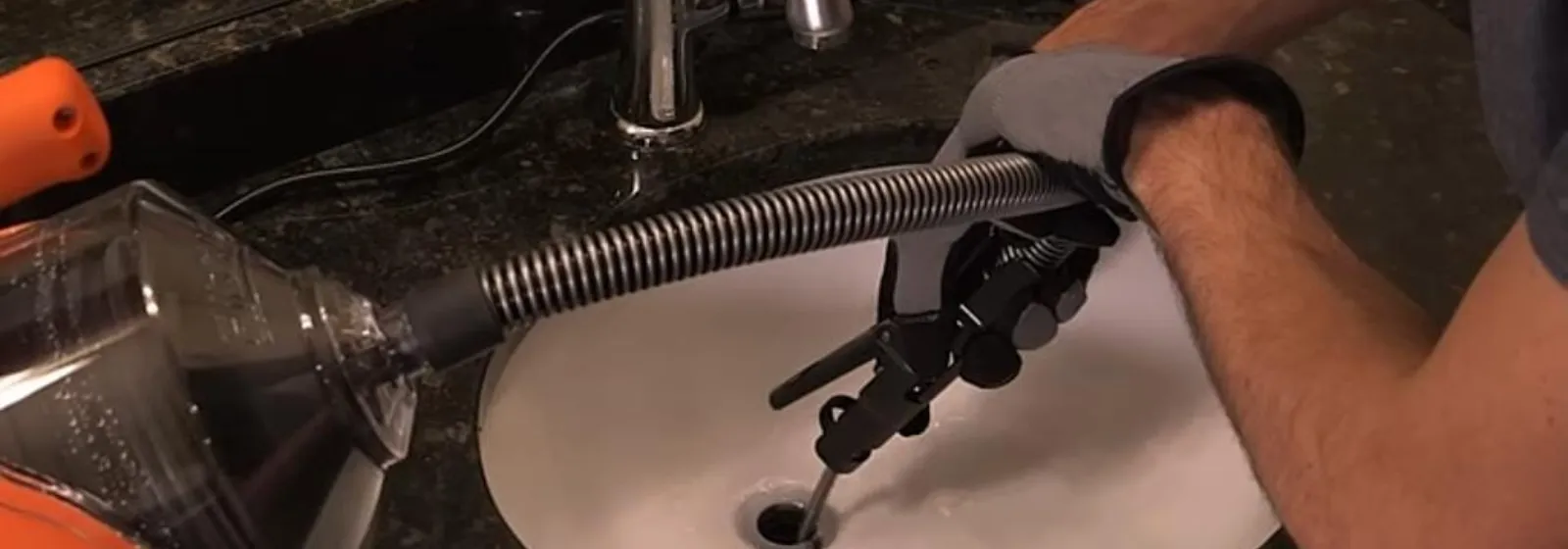
Drain snaking means feeding a rotating steel cable into the pipe until the head reaches the blockage. The head either hooks the clog and pulls it back or bores a channel through it. Different heads handle different jobs: a small spear for hair, a cutter blade for roots, a retrieving head for a lump of paper and wipes.
A hand auger works in a sink trap or a tub overflow. A motorized drum machine handles longer runs, including the main line to the street connection. We match the cable size to the pipe, because a cable that is too stiff can scrape an old pipe wall and one that is too thin simply coils up without cutting anything.
- 1
Find the access point
We look for a cleanout, a pulled toilet or a trap, so the cable enters as close to the clog as possible.
- 2
Run the cable
The machine turns the cable while we feel for resistance. A change in feel tells us when we hit the blockage and how dense it is.
- 3
Break or retrieve the clog
We pull back debris where we can, so it does not settle further down the line.
- 4
Flush and test
We run water for several minutes and watch the drain, then check the other fixtures on the same line.
Water not draining? Call now
Tell us which fixture is blocked and we will tell you whether it can wait for morning. Evening and weekend visits are available, same day when the schedule allows. Call (215) 714-6692.
Snake, jet or camera: choosing the first move
A snake is the fastest fix for most household clogs. Jetting is better when the pipe is coated with grease or roots keep returning. A camera shows what is actually down there, which matters when the same line clogs twice in a season.
Cable snaking fits when
- One fixture or branch line is blocked
- Hair, paper or a soft obstruction is the likely cause
- You need the line open tonight
- The pipe is in decent shape and the clog is a single mass
Jetting or a camera fits when
- The same drain has clogged more than once
- Grease or scale coats the full pipe wall
- Roots are suspected in the main line
- You want to see pipe condition before deciding on repairs
If the cable keeps returning with roots or the clog comes back in weeks, we recommend a camera inspection so you see the pipe and not just the symptom. For heavy buildup along a long run, jetting the line scours the wall in a way a cable cannot.
Why drains clog in Horsham homes
Census figures put Horsham Township at about 27,882 people, with 71.5 percent of homes owner-occupied. That matters for drains, because owners usually carry the cost of the lines inside the house and the building lateral out toward the street.
Under the Authority's rules, the owner maintains the building lateral from the house to the right-of-way, and the Authority owns the service lateral beyond that line. Building laterals must carry a cleanout at the right-of-way, at every bend and at every 100 feet. Know where yours sits, because a cleanout within reach turns a long, messy job into a short one.
The causes are ordinary. Most calls come from a short list: kitchen grease that cooled in the pipe, hair in tub traps, wipes labeled flushable, and tree roots that find a joint in an older line. The Authority asks that wipes go in the trash, not the toilet. Roots take years to grow into a clay or cast iron joint, so a main-line clog in an older house is often a pipe problem, not a one-time accident.
The year your house was built helps us predict what is under it. Homes of different eras used different drain materials, and we adjust the tool to match. Tell us the approximate year when you call.
Kitchen sinks and laundry lines
A kitchen sink clog usually builds up over months, not overnight. Grease, coffee grounds and food scraps coat the line until a small blockage closes it. Running hot water for a minute after washing dishes helps, but it does not replace a clean line once the pipe has narrowed.
Laundry drains clog from lint, and a washer discharging faster than a partly blocked standpipe can handle will overflow onto the floor. If your washer drain backs up into a utility sink, call before the next load, because it can trace back to the same main line.
What affects the price of drain cleaning
Drain jobs vary because the clog and the pipe vary. We explain the number before we start.
Which drain and how deep
A trap under a bathroom sink is a short job. A main line with a cleanout at the foundation is a longer one.
Equipment needed
A hand auger, a drum machine and a jetter are different tools, and a camera adds time and gear.
Access
A cleanout makes the job faster. If we must pull a toilet to reach the line, that adds labor.
After-hours timing
Night and weekend calls cost more to staff than a weekday morning visit, and we say so up front.
Repeat or recurring clogs
If a line clogs again, the fix may include inspection or jetting and not another quick pass.
Insurance sometimes covers water damage after a backup but rarely covers the clog itself. Want your real number? Call (215) 714-6692.
Landlords, property managers and small businesses
If you manage rental units or a small commercial space, tell us how many units share the line. A blockage in a shared stack affects every tenant downstream, and we often need to run the cable from a cleanout rather than from one apartment. For larger commercial properties, our commercial plumbing service covers grease lines and floor drains.
Keep drains clear between visits
- Wipe pans before washing, and pour cooled grease into a can, not the sink
- Fit a hair catcher in every tub and shower
- Flush toilet paper only, even when packaging says flushable
- Run hot water for a minute after the dishwasher cycle
- Pour nothing caustic down a drain that is already slow
- Call early if a drain slows twice in a month
We also dispatch to neighboring towns such as Hatboro. Give the dispatcher your address when you call and we will confirm that it is in our service area.
Questions about drain cleaning in Horsham
Yes. Our dispatch line is open 24/7, including overnight and weekends, and we book same-day appointments when available. Tell the dispatcher which drain is blocked and whether water is rising, so we can send the right equipment.
Stop running water, close plugs, lift items off the lowest floor and note which fixtures are affected. Skip chemical drain openers, because they can burn skin and complicate the cable work.
If several fixtures drain slowly together, a toilet gurgles when another fixture runs, or water backs up through a basement drain, the main line is the likely cause. A single slow fixture is usually a branch clog. If neighbors are backing up too, the Authority checks the street sewer main for free on a blockage call at (215) 672-8011, so call it before paying for a visit that cannot reach the problem.
Not when the cable is sized to the pipe. Old, brittle pipe can be scraped by a heavy cutter, which is why we run a camera first when a line looks fragile.
Choose jetting when the pipe is coated with grease or roots or the clog keeps coming back. The method is explained on our jetting page.
Lines inside the house are yours, and so is the building lateral that carries waste out toward the street. The Horsham Water and Sewer Authority owns the service lateral from the right-of-way or easement line to the main. Find your cleanout before a clog, since that is where the cable goes in.
Yes. Landlords and property managers can call for single-unit clogs or shared stacks. Tell us the unit count and whether tenants have reported backups on other floors.
Recurring clogs usually mean grease, roots or a damaged section. We can inspect with a camera and recommend jetting or repair before the next backup.
Sources we checked
Local facts on this page come from these public pages. Plumbing work in Pennsylvania falls under the Uniform Construction Code, which adopts the International Plumbing Code (IPC) provisions, so ask Horsham Code Enforcement which edition applies before a permit is pulled. Rules and phone numbers change, so confirm with the office before you act.
- census.gov/quickfacts/fact/table/horshamtownshipmontgom... Census
- nwwater.com/horsham-water-and-sewer-customers Authority report
- horshamwater-sewer.com/sites/default/files/2026-02/horsham-water-se... Authority rules
- horshamwater-sewer.com/did-you-know Authority page