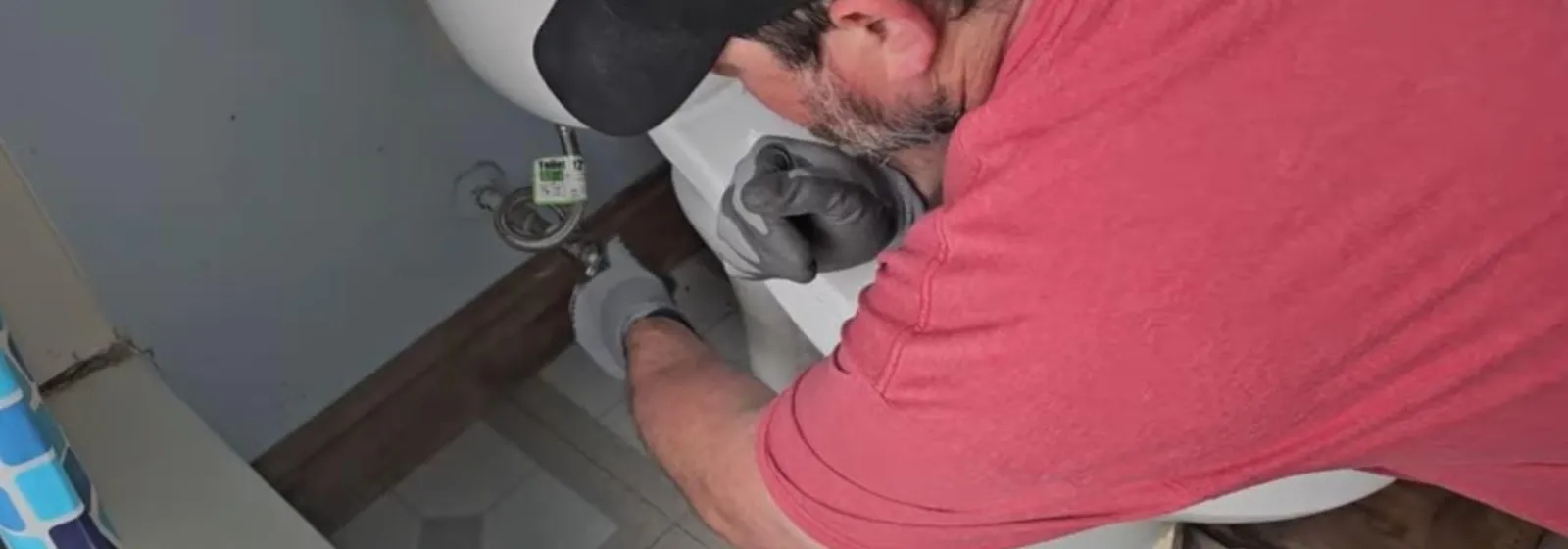
Toilet overflowing right now: stop the water first
Overflow comes from two sources. Either the bowl is clogged and the tank keeps refilling it, or the fill valve is stuck open and keeps pouring. Shut the supply valve on the wall behind the bowl, a quarter-inch to three-eighths-inch line on most toilets, and the flow stops in seconds.
If the valve will not turn, or you can't find it, shut the main water valve for the house. After that, mop up and call us. A bathroom floor that stays wet for a day can soften subfloor, so same-day service matters here.
Signs your toilet needs a plumber, not a plunger
Water at the base
A seep around the base after a flush is usually a failed wax ring or a loose closet flange, not a crack in the bowl.
Gurgling after a flush
A toilet that gurgles and the shower drain bubbles together suggests a partial blockage deeper in the line.
Phantom flushing
The tank refills on its own every few minutes. A worn flapper is the usual cause and it wastes gallons all day.
Weak or incomplete flush
Mineral scale in the rim jets or a low water level in the tank limits flush power.
Rocking bowl
Movement means the flange bolts are loose or the floor under the toilet is softening.
Every toilet is slow
One slow toilet is a fixture problem. All of them together is a line problem, and drain cleaning is the right service.
Before we arrive: toilet emergency steps
These steps take under five minutes and limit water damage.
Close the supply valve
Turn it clockwise behind the toilet until it stops. If it is stiff, do not force it hard, since old valves can snap.
Stop the tank
Lift the lid and hold the flapper down, or lift the float so the fill valve stops.
Protect the floor
Lay towels, move rugs and keep children and pets out. Water near a bathroom outlet is a shock risk, so stay off the circuit if the floor is wet.
Keep it for us
Do not pour drain cleaner into the bowl. The chemicals splash on us when we pull the toilet.
Repairing the toilet you already have
Most toilet repairs are inside the tank. The flapper, fill valve and flush valve gasket are replaceable parts that cost far less than a new toilet. We replace the part, test the flush three times and check the supply line while we are there.
- 1
Diagnose by symptom
We check the water level, flapper seal and fill valve before touching anything.
- 2
Replace the worn part
Fill valve, flapper, supply line or shutoff, whichever failed.
- 3
Reseat when the base leaks
We pull the toilet, replace the wax ring or the seal, inspect the closet flange and set the bowl level.
- 4
Test and check
Several flushes, then a dry-paper check around the base for slow seeps.
Toilet leaking through the ceiling below?
If water is coming through a lower ceiling, shut the main water valve and call (215) 714-6692 right away.
Wax rings, flanges and what lies under the bowl
The closet flange is the ring that anchors the toilet to the drain, usually 3 or 4 inches across. If it is cracked, corroded or sits below the floor surface, a new wax ring alone will not seal. We inspect it every time we pull a toilet and tell you when it needs a repair ring or a replacement.
A leak at the base can also soak into the subfloor for months before a stain appears, so if the floor feels soft near the bowl, say so when you call. If you suspect the leak is elsewhere in the bathroom, a visit under leak detection can trace it.
Toilet installation and replacement
Replacing an old toilet makes sense when the bowl is cracked, the porcelain is stained through, or you are tired of double flushing. Most houses have a 12-inch rough-in, the distance from the wall to the drain center, but we measure before you buy. A 10-inch or 14-inch rough-in needs a different model.
WaterSense-labeled toilets use no more than 1.28 gallons per flush, and the EPA lists them on its WaterSense site. Choose a bowl height and shape that fits your bathroom, and we handle the removal, the new wax ring, the supply line and the haul-away of the old one.
Horsham Township Ordinance 3007 (1991) caps toilets at 1.6 gallons per flush whenever plumbing is installed or altered in a permitted building. A WaterSense bowl at 1.28 sits well under that cap, so it is the safe pick if your project involves a permit.
Basement toilets and upflush systems
A basement bathroom below the sewer line cannot drain by gravity alone. These setups use a sealed upflush unit or an ejector pit that pumps waste upward. If the unit hums but does not move waste, or an alarm sounds, call us and stop using the fixtures. We repair many of these, and we will tell you if the unit has outlived repair.
What affects the price of toilet repair
A flapper swap and a full reset on a cracked flange are different jobs.
Part or whole toilet
A fill valve is a small repair. A cracked bowl means replacement.
Flange condition
A damaged closet flange adds a repair ring and time.
Floor damage
A soft subfloor may need a carpenter before the toilet goes back.
Fixture choice
Standard, comfort-height and one-piece models differ in price and weight.
Time of call
Night and weekend calls can carry different rates than daytime visits.
Homeowners insurance generally covers sudden water damage but not wear and tear, so ask your insurer. Want your real number? Call (215) 714-6692.
Questions about toilet repair in Horsham
Yes. Dispatch runs 24/7 and we offer same-day appointments when available. Call (215) 714-6692 and tell us whether the toilet is overflowing or leaking, so we can bring the right parts.
Usually the flapper no longer seals, or the fill valve will not shut off. Both are small repairs. A running toilet can waste many gallons a day, so it is worth fixing.
Water around the base after flushing, a sewer smell, or a rocking bowl are the signs. Wax rings can fail even without any visible crack in the toilet.
Yes. Comfort-height bowls are common. Tell us the rough-in measurement or let us measure it first.
Stop using it and any other fixture draining to the same unit. Check the alarm and the power, then call us.
Yes if it is overflowing, if it will not clear, or if it is your only bathroom. If every drain is slow, the main line may be blocked, which is a sewer line cleaning call.
The township permit page lists plumbing fixtures as work that needs a permit. Call Code Enforcement at (215) 643-3131 (weekdays 8:30 AM to 4:30 PM) and describe the swap before you buy the bowl. If an inspection is required, it needs 24 to 48 hours notice, so ask before you plan the flooring around it.
Sources we checked
Local facts on this page come from these public pages. Plumbing work in Pennsylvania falls under the Uniform Construction Code, which adopts the International Plumbing Code (IPC) provisions, so ask Horsham Code Enforcement which edition applies before a permit is pulled. Rules and phone numbers change, so confirm with the office before you act.
- epa.gov/watersense/residential-toilets State agency
- pa.gov/content/dam/copapwp-pagov/en/dli/documents/u... State agency
- horsham.org Township page
- horsham.org/10737/Permits Township page
- ecode360.com/9953240 Township ordinance