What a sewer camera shows that a visual check cannot
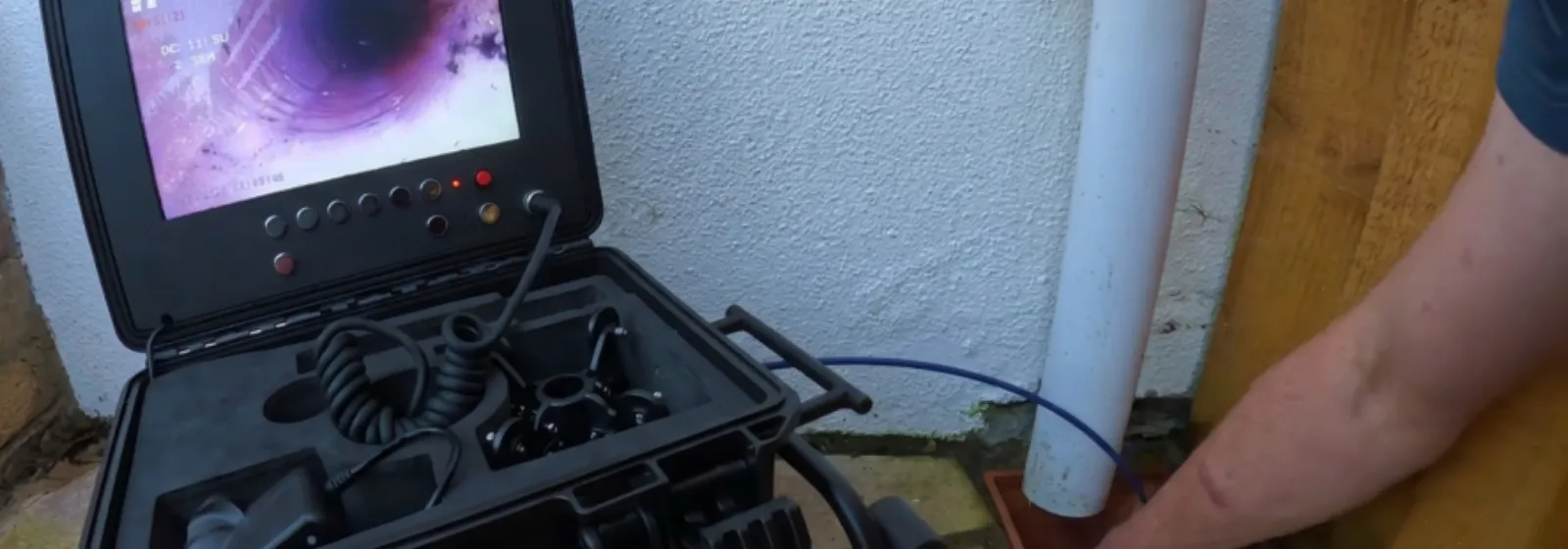
Most of your sewer line is underground, so a home inspector sees only the cleanout and the fixtures. A camera on a flexible rod travels the full length of the pipe, usually from a cleanout toward the street connection. A light and a recording lens capture the inside wall, and a monitor shows it live.
You see the pipe as it is, not as a guess. That includes the material, the joint spacing, any bend or low spot, and whether roots, grease or scale are present.
Roots
Fine roots appear as white threads at a joint. A heavy mat looks like a brown wall across the pipe.
Cracks and offsets
A crack runs like a line along the pipe, and an offset shows as a step where two sections no longer align.
Low spots
A belly is a section that holds water, visible as a still pool where the rest of the pipe is dry.
Pipe material
Cast iron, clay, plastic and fiber pipe each look different. Knowing which you have changes repair options.
Debris and buildup
Grease, scale and wipes show their thickness, which helps us choose between sewer line cleaning and a lighter pass.
When a camera inspection is worth booking
The best time is before a problem forces your hand. A planned inspection is calmer and cheaper than a midnight backup, and the footage tells you what to expect.
Good reasons to schedule one
- You are buying a house and want to know the lateral's condition before closing
- The same drain has clogged more than once
- You smell sewer gas but cannot find a source
- A tree has grown near the line or you plan to dig, plant or build near the line
- A recent backup cleared but nobody knows why
- You want a baseline record of the line before selling
If a line is actively backing up, that is a cleaning call first. We clear the blockage and then camera the run. Once the pipe is open, the footage is easier to read.
Buying or selling a house in Horsham
Most Horsham Township homes are owner-occupied (71.5 percent, per the Census), so a buyer typically inherits both the pipe and its upkeep. A lateral that works today may still have roots at a joint or a belly that will clog under heavier use. The camera tells a buyer which risk comes with the house.
The Authority's rules do not require a lateral video when a house sells. They call for televising only a lateral that has sat idle for more than a year before it returns to use. The township does run a resale inspection program through Code Enforcement at (215) 643-3131, so ask what it covers before you set a closing date.
How an inspection runs
- 1
Find access
We use a cleanout when one exists. If none does, we pull a toilet or use a roof vent, which takes longer.
- 2
Run the camera
We feed the camera toward the street connection, noting footage markers at each joint and each change.
- 3
Locate the problem
A locator in the camera head sends a signal we can track above ground. We can mark the spot and measure depth.
- 4
Review the video
We stop on each finding and explain it. You get a plain written summary of what we saw and what we suggest.
Want to see your line before you commit?
Book a camera visit for a quiet day, or tell us about a recent backup and we will fit you in. Same-day appointments are available when the schedule allows. Call (215) 714-6692.
Reading the pipe: cast iron, clay, fiber and plastic
The material in the ground sets the repair plan. Cast iron was common in older homes and can rust from the inside, showing flaking scale. Clay tile comes in short sections with many joints, so roots find openings.
Fiber pipe, often called Orangeburg, is made of compressed tar paper, and it can soften, oval or collapse. Plastic is smooth and light, and it fails mostly at fittings or from ground movement.
We tell you plainly what the camera shows. A pipe that looks rough but is working may need only maintenance. A collapsed section needs repair, and we explain the choices in our sewer line repair service.
What a camera cannot do
A camera can show
- Cracks, offsets and roots inside the pipe
- Pipe material and condition
- Low spots and buildup
- The location of a problem when paired with a locator
A camera cannot show
- Past a full blockage, which must be cleared first
- Leaks in supply pipes, which are a leak detection job
- Ground conditions outside the pipe
- Whether a repair will last, which depends on the work
We say when a result is unclear. We do not claim a clean bill of health from a partial run, and we mark where the camera stopped so a second visit can pick up from there.
If the video shows a problem before closing, you can bring it to your agent and ask about a repair or a credit. Having the recording in hand makes that conversation concrete, and a second contractor can review it for a second opinion.
What affects the price of a sewer camera inspection
Inspections are quoted by the work involved, not by a flat fee. You hear the number before we begin.
Access
A cleanout at the foundation is the fastest route. A line without one needs more setup.
Length and complexity
A short straight run is quick. A long lateral with bends takes more time.
Cleaning first
If the pipe is blocked or coated, we must clear it before the camera can see.
Locating and marking
Tracing a problem above ground and noting depth is added work.
Written report and footage
A summary for a buyer, lender or landlord takes time to prepare.
Some insurers ask for a camera report after a backup claim. Want your real number? Call (215) 714-6692.
What happens after the inspection
If the pipe is sound, you keep the footage as a baseline. If it needs routine care, we suggest a schedule. If it needs repair, we give you options, including whether the fix can be done without a trench, and we do not push work the video does not support.
The Authority owns the service lateral up to the right-of-way or easement line, and the owner maintains the building lateral on the house side. Footage that shows damage past that line goes to the Authority at (215) 672-8011, while damage on your side is your repair. Having the distance from the cleanout in the recording makes that call easy.
We also visit nearby communities such as Maple Glen. Give us your address when you call and we will confirm.
Questions about sewer inspection in Horsham
Usually the entire run from the cleanout to the street connection, unless a blockage, a collapse or a severe offset stops it. We tell you where it stopped and why.
It helps, and Authority rules call for one on a building lateral at the right-of-way, at every bend and every 100 feet. If yours is missing or buried, we can enter through a pulled toilet or a roof vent, though that takes longer.
It finds cracks and openings in a sewer pipe. For supply-line leaks, you need leak detection instead.
It is a smart step, especially for older houses. The video shows pipe condition and roots that a standard inspection cannot see.
Not under the Horsham Water and Sewer Authority's rules, which call for televising only a lateral idle for over a year. The township has its own resale inspection program, and Code Enforcement at (215) 643-3131 can tell you what it covers for your sale.
Many take about an hour, including setup and review. A longer line, a blocked line or poor access adds time.
Yes, you can ask for the recording and a written summary. Keep it with your house records.
We explain the finding on screen, show you where it is, and outline repair choices. You decide what to do, and there is no pressure to book the same day.
Sources we checked
Local facts on this page come from these public pages. Plumbing work in Pennsylvania falls under the Uniform Construction Code, which adopts the International Plumbing Code (IPC) provisions, so ask Horsham Code Enforcement which edition applies before a permit is pulled. Rules and phone numbers change, so confirm with the office before you act.
- census.gov/quickfacts/fact/table/horshamtownshipmontgom... Census
- horshamwater-sewer.com/sites/default/files/2026-02/horsham-water-se... Authority rules
- horsham.org/43833/faqs Township page
- horsham.org/10737/Permits Township page