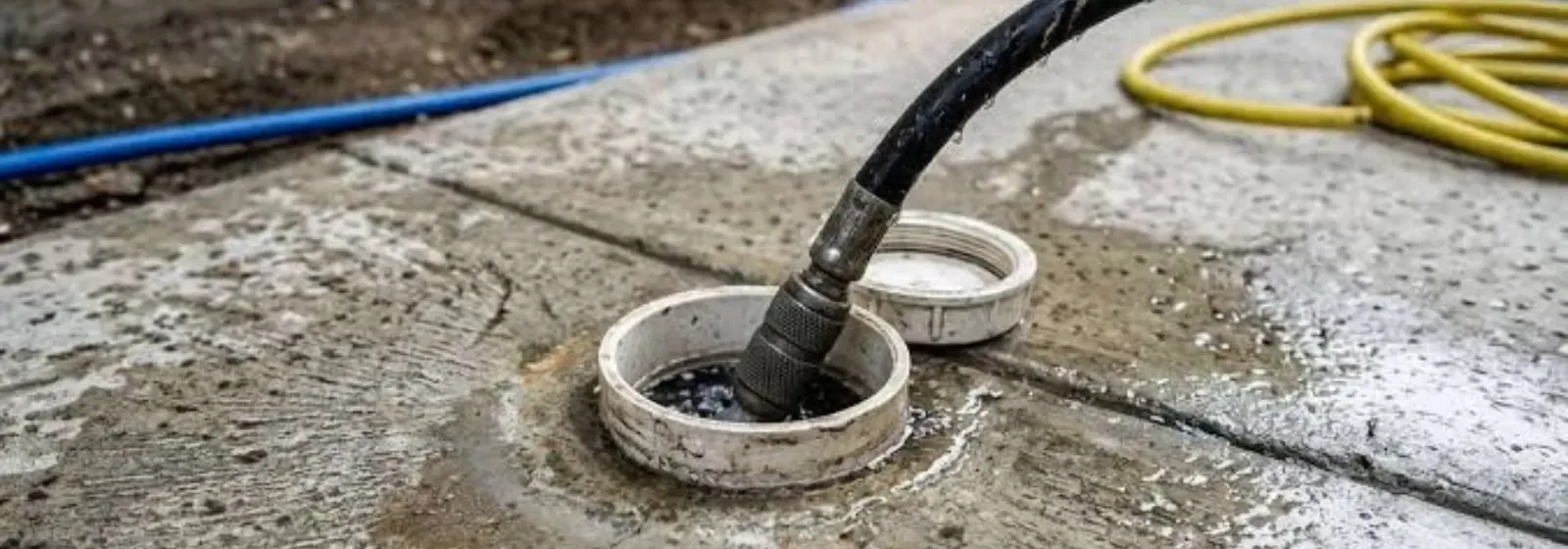
What hydro jetting does inside the pipe
A jetting hose carries a nozzle with several rear-facing jets and, usually, one forward jet. The rear jets push the nozzle up the pipe and also pull the hose along, while the water scrubs the pipe wall in a full circle. Debris is flushed downstream, rather than poked through a small hole as a cable does.
That difference matters because a drain cable cuts a channel the width of its head. Grease and soap scum on the sides of the pipe stay behind, narrowing the bore a little more each month. Jetting restores much of the original diameter.
Pipes and problems that suit it
Grease buildup in kitchen lines
Cooking fat cools into a waxy layer on the pipe wall. Jetting with heated or high-flow water strips it where a cable would only open a narrow path.
Tree roots in clay or cast iron laterals
A cutting nozzle can clear root masses at joints. Roots regrow through open joints, so jetting is maintenance unless the pipe is also repaired.
Scale and rust nodules in old cast iron
Cast iron grows rough internal deposits over decades. Jetting knocks the loose material off, as long as the pipe wall is sound.
Repeat clogs at the same spot
If a snaked line clogs again within weeks, the blockage is usually a coating rather than a plug.
When we say no to jetting
High pressure can finish off a pipe that is already cracked, collapsed, or badly offset. Fiber conduit sold under the Orangeburg name in the mid 1900s is especially fragile, and thin or corroded pipe may not survive the pressure either.
That is why a camera goes in first. If the picture shows damage, the better answer is a sewer line repair or a gentler cleaning method, not more pressure.
Jetting versus snaking, side by side
| Question | Drain cable (snake) | Hydro jetting |
|---|---|---|
| What it does | Punches a hole through the clog | Scours the full pipe wall |
| Best for | A single plug like a toy or a hair mat | Grease, scale, roots, repeat clogs |
| Risk to fragile pipe | Low | Higher, so a camera check comes first |
| How long relief lasts | Often weeks if buildup remains | Typically longer, as the pipe is cleaner |
| Access needed | Any cleanout or fixture trap | A cleanout large enough for the hose |
For a one-off sink clog, drain cleaning with a cable is usually enough. We move to jetting when the symptoms point to buildup along the line: slow drains in several fixtures, gurgling at the toilet, or a clog that returns.
Not sure which method your drain needs?
Describe the symptoms to a dispatcher at (215) 714-6692, and we will tell you whether a cable, a camera, or jetting is the right first step.
How a jetting visit runs
- 1
Locate the cleanout
The plumber finds your main cleanout, usually in the basement near the foundation wall or outside the house. Authority rules call for a cleanout at the right-of-way, at every bend and every 100 feet of building lateral, so ask which ones you have. If there is none, a toilet may have to be pulled.
- 2
Run a camera
A small camera shows pipe material, joints, offsets, roots, and cracks. This decides whether jetting is safe.
- 3
Jet the line in passes
The nozzle works from the cleanout toward the street, then back. Plumbers repeat passes until the water runs clear.
- 4
Check flow and confirm
Water is run through fixtures to test drainage, and a second look with the camera can show the cleaned wall.
What changes the price
Cost depends on line length, how many cleanouts there are, whether the camera inspection is bundled, and how much buildup the nozzle meets. Heavy root intrusion takes more passes than light grease. Cleaning a lateral with no cleanout adds labor to open access. Ask for the price before work starts, and ask whether the camera step is included or separate.
Keeping the line clean afterward
A freshly jetted line starts building film again the first time bacon grease goes down the kitchen sink. Wipe pans with a paper towel and put fat in the trash, since hot water only moves grease a few feet before it cools and sticks. Strainers in tub and shower drains catch hair before it reaches the main.
Flushable wipes are another repeat offender. They do not break down the way toilet paper does, and they snag on roots and rough joints in the lateral. Put them in the trash even when the package says otherwise.
After a jetting visit, watch for three signs over the next month. Gurgling in a toilet when the washing machine drains, slow drainage in the lowest fixture, or a sewer smell in the basement all mean the line is narrowing again or a section has shifted. Tell the plumber and ask for another camera pass rather than another round of pressure.
Preparing your house
Before the plumber arrives
- Clear a path to the cleanout and move storage away from it.
- Stop running water, dishwashers, and washing machines.
- Lift rugs near the cleanout area and expect some water on the floor.
- Keep pets and children out of the work area.
- Note which fixtures drain slowly and when it began.
Our hydro jetting page lists the equipment and the lines we clean. We also clear repeat backups for homes near Ambler and Warrington, where a cable alone has stopped holding.
Who owns the pipe you are about to jet
Under the authority's Rules and Regulations (revised 2/9/26), Horsham Water & Sewer Authority owns the service lateral out to the right-of-way or easement line, and you own the building lateral from there to the house. Building laterals are supposed to have a cleanout at the right-of-way, at every bend, and every 100 feet. Count the cleanouts you have, because each one is a place a jetting hose can enter.
If a backup hits, call the authority at (215) 672-8011 before you book anyone. It checks the street main for free, and if the main is the problem, jetting your lateral would be money wasted. The authority also notes that basic homeowner policies often exclude sewer backups, so ask your insurance agent before you assume a cleaning bill is covered.
Businesses face a stricter rule. Grease, oil and sand interceptors are required in commercial and industrial buildings, the owner maintains them, and chemical dispersants need authority approval. If your kitchen line keeps coating over, jetting treats the symptom, so check that the interceptor is serviced. Debris from any job should leave through a sanitary cleanout, never a storm inlet, because the township's stormwater system drains to the Neshaminy, Wissahickon and Pennypack watersheds.
Questions and answers
It depends on the pipe's condition. Cast iron and clay with sound walls often tolerate it, while collapsed or fiber pipe can be damaged. A camera inspection decides, which is why we look before we jet.
Most homes never need it. If grease, scale, or roots keep returning, annual or biennial cleaning can break the cycle. Repair the pipe first if the camera shows cracks that let roots in.
No. It clears the roots that are there, but roots regrow wherever a joint is open. A repair or liner is the long-term fix, and jetting buys time.
Consumer machines run at far lower pressure than professional units and can push debris deeper without scouring the wall. Pro equipment also comes with a camera and nozzle selection, which matter more than raw pressure.
Horsham Water & Sewer Authority owns the service lateral to the right-of-way or easement line, and you own the building lateral from there to the house. If your neighbors report backups too, call the authority at (215) 672-8011 first, since it checks the street main for free.
A typical single-line job takes a couple of hours including the camera look. Long laterals or heavy roots take longer. We confirm the plan once we see the pipe.
Sources we checked
Local facts on this page come from these public pages. Plumbing work in Pennsylvania falls under the Uniform Construction Code, which adopts the International Plumbing Code (IPC) provisions, so ask Horsham Code Enforcement which edition applies before a permit is pulled. Rules and phone numbers change, so confirm with the office before you act.
- horshamwater-sewer.com/sites/default/files/2026-02/horsham-water-se... Authority rules
- horshamwater-sewer.com/sewer-backups Authority page
- horshamwater-sewer.com/did-you-know Authority page
- files.dep.state.pa.us/water/Wastewater%20Management/eDMRPortalFile... State agency