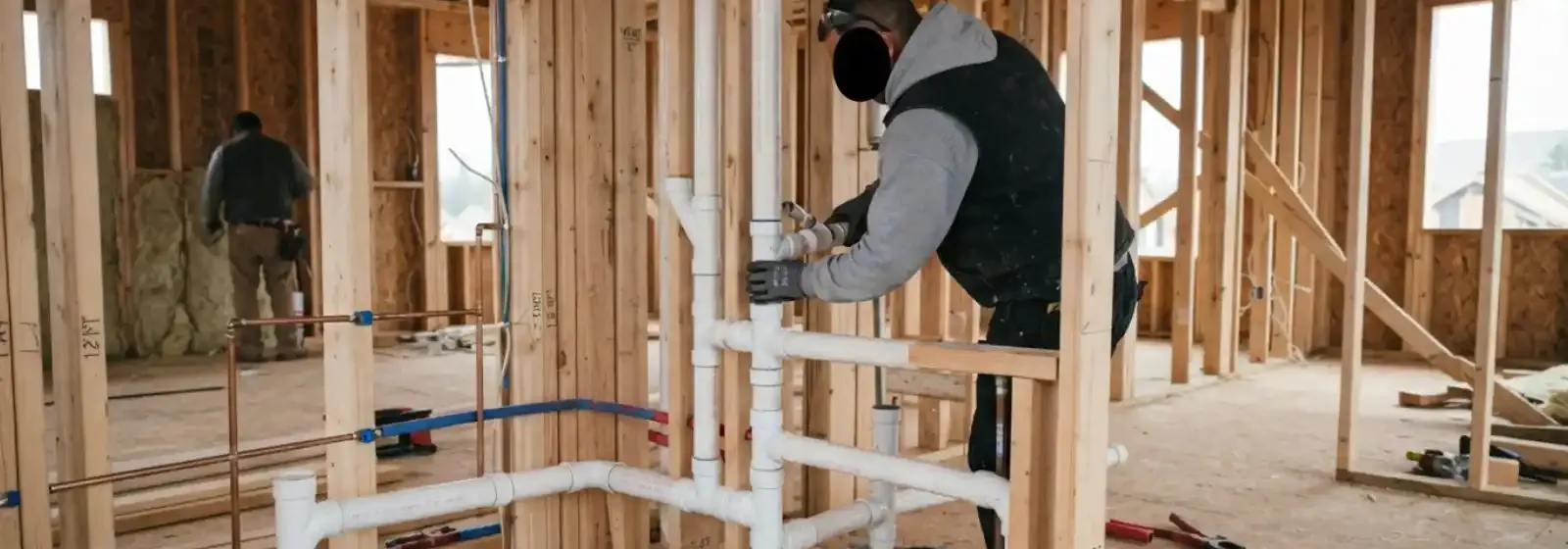
What a plumbing installation visit covers
Every fixture needs three things: a water supply, a drain with a trap and a vent. A new sink or toilet in an existing bathroom taps lines already there. A bathroom added in a basement or garage can mean new supply, drain and vent runs, and sometimes a pump.
- 1
Walk the space
We look at where the supply, drain and vent are, and what the fixture needs.
- 2
Price before work starts
You get the cost in writing before anything is cut or ordered.
- 3
Rough-in and set
Pipe and valves go in first, then the fixture is set.
- 4
Test
We pressure-check the supply, fill and drain the fixture and look for slow seeps.
Bathtub, shower and valve plumbing
A shower valve sits inside the wall, so its location is fixed before tile goes up. Pressure-balancing or thermostatic valves keep the temperature steady when someone flushes a toilet elsewhere in the house. Tub drains are typically 1-1/2 inch pipe, and the overflow tee has to be sealed or the tub leaks into the ceiling below.
If you are only changing the trim, handle and spout, you may not need to open the wall. If the old valve is leaking or you are changing from a tub to a walk-in shower, the valve and drain usually change as well.
Appliance hookups
Dishwasher
A supply line from an angle stop and a drain hose looped high under the counter, tied to the disposal or the trap.
Washing machine
Two valves for hot and cold and a standpipe with a trap. Braided hoses replace old rubber ones, which burst.
Refrigerator ice maker
A small 1/4 inch line from a saddle or a dedicated shutoff. Plastic lines kink and leak, so we prefer a braided or copper one.
Utility and laundry sinks
Usually a basement standpipe or a tie into the washing machine drain. If the floor is below the sewer line, a pump is needed.
Planning a bathroom or kitchen project?
Call (215) 714-6692 before demolition starts. We can tell you what the existing pipes will support.
Permits and inspections in Horsham Township
Pennsylvania's Uniform Construction Code is the statewide framework, and municipalities handle permits and inspections locally. The township's permit page lists plumbing fixtures, including water heaters and water softeners, as work that needs a permit, and it warns of fines for work done before one. Code Enforcement is at 1025 Horsham Road, (215) 643-3131, open weekdays 8:30 AM to 4:30 PM. Inspections need 24 to 48 hours notice, so book yours before the drywall goes up.
We tell you whether a job looks like one that normally needs a permit, and we do not guess. If your project involves gas, electrical work or structural changes, those are separate trades with their own rules.
Pennsylvania has no statewide plumber license, so the paperwork is your protection. Ask Code Enforcement whether the township adds its own plumber license. Any contractor doing $5,000 or more of home improvements in a year must register with the Attorney General, and you can look up a name at hicsearch.attorneygeneral.gov or call 1-888-520-6680 before you sign anything.
Fixture choices that affect the plumbing
Pick fixtures before the plumber rough-ins. A wall-hung toilet needs an in-wall carrier. A freestanding tub needs a floor-mounted filler or a wall-mounted spout. A vessel sink needs a taller faucet. Buying after the walls close can force changes.
WaterSense-labeled products are tested for water efficiency. For toilets the limit is 1.28 gallons per flush, and for bathroom faucets 1.5 gallons per minute. Ask us if a fixture you like will work with your pressure and pipe size.
In a permitted building, Township Ordinance 3007 (1991) limits toilets to 1.6 gallons per flush and faucets to 3.0 gallons per minute. Both WaterSense numbers come in under those limits, so a labeled fixture also satisfies the ordinance on a remodel that needs a permit.
Planning the job so the visit goes smoothly
Before we come out, clear the cabinet or work area and have the new fixture on site, still in the box. Check that the box includes the faucet, drain assembly and mounting hardware. Missing parts are the most common reason an install stretches to a second visit.
Know where your main water valve is, and tell us if it is stiff or leaks at the stem. We shut water to the house for most installs, and a valve that will not close can turn a one-hour job into a repair. Old galvanized supply or corroded valves are worth mentioning on the phone.
Take a photo of the space and send the model number of any fixture, appliance or pump before the visit. Measure the cabinet width, the toilet rough-in or the tub alcove, and note whether the floor is slab, crawl space or basement. That lets us bring the right valves, traps and fittings on the first trip.
Related work in the same visit
Installation and repair often overlap. If a bathroom remodel exposes old galvanized or leaking pipe, repiping can be done while the walls are open. If your old toilet or faucet is worn, toilet repair and faucet repair describe what we do with the fixtures you already have.
Commercial tenant fit-outs, such as restrooms and break-room sinks, are covered under commercial plumbing. Homeowners in Ambler and Hatboro can book the same planned installs.
What affects the price of plumbing installation
A faucet swap and a new bathroom are far apart. These are the factors.
Fixture and material cost
Fixtures range from builder-grade to designer, and valves and trims vary.
Access to the pipes
Open walls or a basement ceiling are faster than finished plaster.
New runs vs. existing connections
New supply, drain and vent lines take more labor than tying into what is there.
Permits and inspections
Project scope and township rules decide the permit needs.
Scheduling
Planned work is scheduled on the days that suit you, which is usually less costly than an after-hours call.
Remodeling work is usually not an insurance claim, but ask your insurer if a repair came from a sudden loss. Want your real number? Call (215) 714-6692.
Questions about plumbing installation in Horsham
Usually, yes. The township permit page lists plumbing fixtures as permit work, and Code Enforcement can confirm for your project at (215) 643-3131. Inspections need 24 to 48 hours notice, so call before work starts.
Yes, in many cases. Send us the model and rough-in specs first so we know whether the fixture fits your plumbing.
Rough-in for a single bathroom is often a day or two, then fixtures are set after tile and finishes. Your schedule depends on the contractor and the other trades.
Yes. We connect the supply, the drain and the shutoffs, and replace old rubber hoses with braided ones.
Usually yes. If the valve is seized or weeping, it is easier to replace it while the fixture is off.
Yes, on a separate page. See water heater installation for gas, electric and tankless units.
Same-day appointments are available when the schedule allows. Planned remodel work is scheduled around your project.
Sources we checked
Local facts on this page come from these public pages. Plumbing work in Pennsylvania falls under the Uniform Construction Code, which adopts the International Plumbing Code (IPC) provisions, so ask Horsham Code Enforcement which edition applies before a permit is pulled. Rules and phone numbers change, so confirm with the office before you act.
- pa.gov/content/dam/copapwp-pagov/en/dli/documents/u... State agency
- pa.gov/agencies/dli/resources/compliance-laws-and-r... State agency
- horsham.org Township page
- horsham.org/10737/Permits Township page
- ecode360.com/9953240 Township ordinance
- pa.gov/agencies/dli/programs-services/labor-managem... State agency
- attorneygeneral.gov/businesses-and-organizations/home-improvemen... State agency
- epa.gov/watersense/residential-toilets State agency