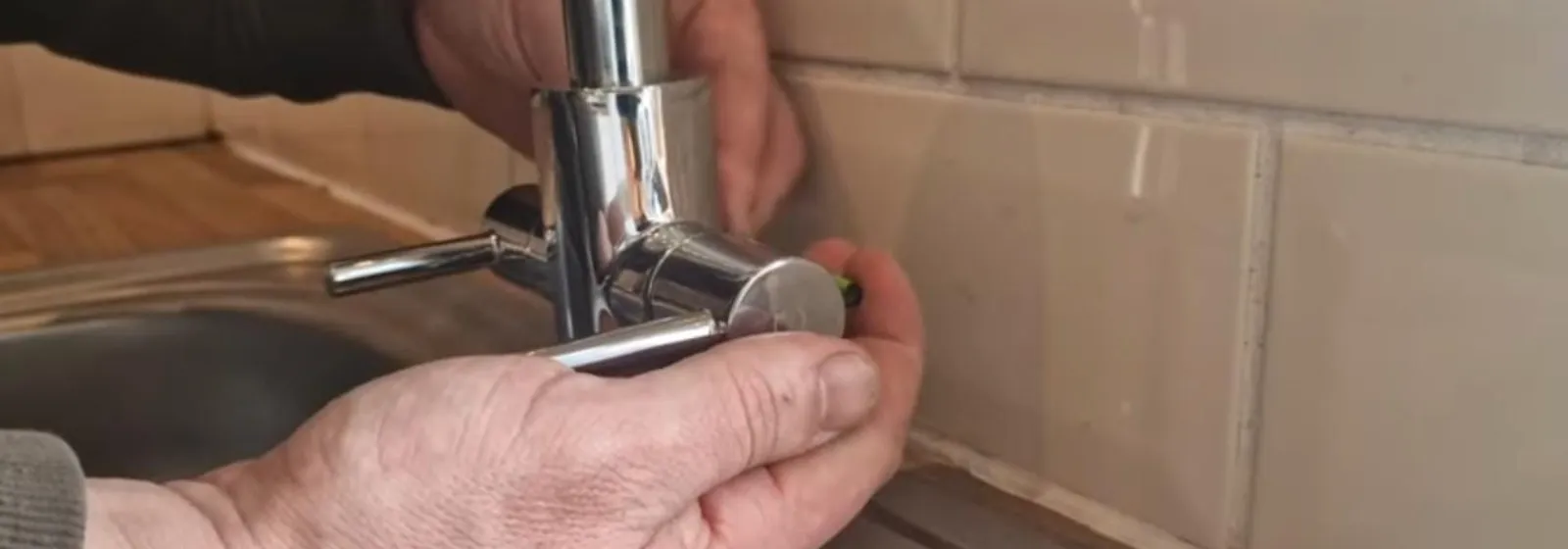
Start by sorting out which kind of slow you have
People say a sink is slow when the water is slow to leave, slow to arrive, or both. The two problems have different fixes, so settle it before you touch anything. Fill the basin about halfway with the stopper closed, open it, and time the drain with your phone.
| What you notice | Most likely cause | Where to look first |
|---|---|---|
| Water pools slowly, then drains with a gurgle | Partial blockage or vent trouble | Trap and vent |
| Water drains fine with the stopper out but slowly with it in | Hair and film on the pop-up stopper | Stopper and pivot rod |
| Drain is quick but the faucet runs weakly | Clogged aerator or a half-closed supply valve | Aerator and shutoff valves |
| Every fixture in the bathroom is slow | Branch line or main line problem | Tub, shower and toilet |
| Slow only after hot showers or brushing teeth | Soap and toothpaste film in the trap | P-trap |
Stopper and pivot rod: the usual suspect
Most bathroom sinks use a pop-up stopper held by a horizontal pivot rod behind the drain tailpiece. Hair wraps the stopper post, soap builds on the rod, and the stopper sits only partly open even when it looks open. The drain is technically clear, but the opening is half its design size.
Lift the stopper out. Many pull straight up, and others need a quarter turn or the pivot nut under the sink loosened first. Wipe away the gray slime with a rag, check the rubber gasket, and reinstall it so it lifts about half an inch when the lift rod is pulled.
The P-trap holds more film than you would guess
Under the basin the P-trap holds water that blocks sewer gas from rising into the room. It also collects soap, toothpaste and skin oils, which cling to the curved walls and narrow the passage over months. A trap can be open to the eye and still carry a coating a quarter inch thick.
- 1
Set a bucket and towel
Slide a bucket under the trap and lay a towel in the cabinet. A trap holds a cup or two of water that will spill when it is opened.
- 2
Loosen the slip nuts by hand
Turn the two large nuts counterclockwise. Plastic ones usually spin by hand, and metal ones may need a gentle pass with channel pliers.
- 3
Empty and scrub the trap
Dump the contents into the bucket and scrub the inside with an old toothbrush or bottle brush. Look through the pipe stub in the wall for stuck debris.
- 4
Reassemble and test
Hand-tighten the nuts, then run water for two minutes while you check for drips. A small weep at a nut usually means the washer is crooked, so back it off and reseat it.
Slow faucet, not slow drain
If the basin empties quickly but you still feel the sink is slow, unscrew the faucet aerator and look at the screen. Tiny mineral flakes and bits of pipe scale collect there and cut the flow. Soak the parts in vinegar for an hour, rinse, and press them back on.
There is one more twist. The EPA WaterSense program describes labeled bathroom faucets and accessories that use a maximum of 1.5 gallons per minute, down from the older standard of 2.2. If your aerator was replaced with a newer model, a gentler stream may be by design and not a defect.
Check the two small shutoff valves under the sink as well. After a plumbing job or a cabinet cleanout, one can end up only partly open, which reduces flow without any noise or leak. Turn each handle fully counterclockwise and see if the stream changes.
Checked all of this and still slow?
Call (215) 714-6692 and describe what you found. We tell you plainly if it needs a visit, and you get a clear price before work starts.
When the vent is the problem
Every drain needs air behind it. A plumbing vent pipe runs from the drain system up through the roof, and when a bird nest, leaves or frost closes the opening, the sink drains slowly and gurgles because it cannot pull air. A tell-tale sign is bubbling or a sucking sound in a nearby toilet when the sink empties.
Do not climb onto a roof to check one. Ladder falls are a serious injury source, and a vent blockage is a job for a licensed professional who can work at height and run a camera or cable down the vent from the roof.
Gurgling after the sink empties
Air is being pulled through the trap seal. Suspect a restricted vent or a partial blockage in the branch.
Toilet bubbles when the sink drains
The two fixtures share a line. Look at a shared branch or vent rather than the sink alone.
Sewer smell near the sink
The trap seal may be pulled dry by poor venting, or the trap may be loose. Check the nuts, then call if the smell stays.
Slow drain plus a damp cabinet floor
A leak at a slip nut or the tailpiece can mimic slowness. Dry everything, then run water and watch.
What we do not recommend
Skip the bottled drain openers. They sit in a partly open drain and attack the stopper hardware, the plastic trap and your skin when you open the trap afterward. A cheap hand tool plus the checks above will clear most nuisance slowness without chemistry.
If your home has a septic tank, chemical openers are an extra bad idea, since they can harm the bacteria the tank depends on. When a drain truly needs more than a cleaning of the trap, our drain cleaning technicians use cables sized to a bathroom branch line.
When a visit saves time
Call if the whole bathroom is slow, if more than one bathroom is affected, or if the sink drains slowly right after you cleaned the trap. Those patterns point past the sink to a shared line or vent. Our faucet and sink repair service also covers worn stoppers, corroded tailpieces and cracked basins that no cleaning will fix.
We work across the area, including Warminster and Maple Glen, so a call from a neighboring address is routine. You get a clear price before work starts.
Plumbing in Horsham: hard water and your faucet aerator
The Horsham Water and Sewer Authority publishes its hardness as a range of about 200 to 350 mg/l as calcium carbonate, with roughly 275 mg/l, or 16 grains per gallon, as the typical figure. That is hard water, so white flakes in your aerator are expected here and not a sign of a bad faucet. Pull the aerator and soak it in vinegar twice a year.
Hardness scale builds in the faucet and on the stopper, not deep in a drain pipe. If the aerator is clean and the basin still empties slowly, the cause is probably soap film, hair or a venting problem, so a plumber visit makes more sense than another round of descaler.
If you own a water softener or plan to buy one, the Authority notes that the instructions may ask for your incoming hardness, and 17.1 mg/l equals one grain per gallon. The township lists softeners among the fixtures that need a permit.
Questions and answers
A coated pop-up stopper, a film-lined P-trap or a restricted vent can all slow a drain without a visible clog. Pull the stopper first, then clean the trap, and listen for gurgling that points to the vent.
We advise against it. Chemical openers sit in a partly open drain, can damage the stopper hardware and plastic trap, and are harmful to a septic system. Hand cleaning the stopper and trap works better and costs nothing.
The Horsham Water and Sewer Authority publishes a hardness range of about 200 to 350 mg/l as calcium carbonate, with about 275 mg/l (16 grains per gallon) as the typical figure. White flakes in the aerator fit that. A store-bought hardness kit at your own tap gives a reading for your house.
Gurgling means air is being pulled through the trap instead of through the vent. A partial blockage in the branch or a restricted vent is the usual cause, and a licensed plumber can tell which with a camera or cable.
Once a year is plenty for most households, and sooner in homes with long hair or heavy product use. Pulling the stopper and wiping it every few months prevents most slowdowns.
Sometimes. If the tub, shower and toilet are slow too, or a floor drain bubbles, the issue is in the shared branch or main line. That needs a drain cleaning visit, not more work at the sink.
Sources we checked
Local facts on this page come from these public pages. Plumbing work in Pennsylvania falls under the Uniform Construction Code, which adopts the International Plumbing Code (IPC) provisions, so ask Horsham Code Enforcement which edition applies before a permit is pulled. Rules and phone numbers change, so confirm with the office before you act.
- horshamwater-sewer.com/hardness Authority report
- horsham.org/10737/Permits Township page
- epa.gov/watersense/bathroom-faucets Federal agency