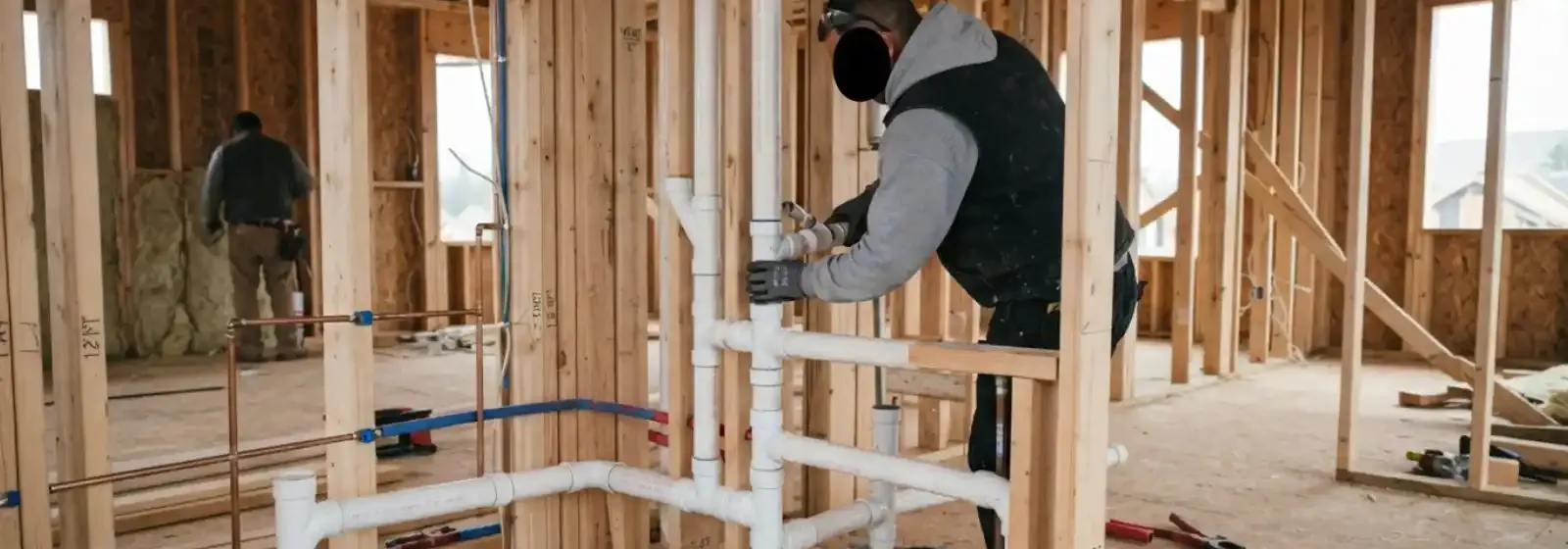
Three ways to get waste out of a basement
Upflush (macerating) toilet
A grinder chops waste and a small pump pushes it through a narrow pipe, often three-quarters of an inch, to a higher drain. Makers rate each model for a vertical lift and a horizontal run, so check the spec sheet against your layout.
Sewer ejector pit
A sealed basin set in the slab collects waste from a toilet, sink, or shower. A pump with a check valve lifts it to the sewer line, and a vent keeps the basin working.
Below-slab gravity drain
If the main sewer line sits low enough, a drain is cut into the slab and sloped to the line. No pump, but the most concrete work and the strictest dependence on depth.
Dedicated basement bath add-on
Some houses already have a floor drain or a stub-up from the original build. A plumber can check what is under the slab before you choose.
Upflush versus ejector, side by side
Upflush toilet
- Installed on top of the slab, little or no concrete cutting
- Handles a toilet, and some units also take a sink or shower
- Moving parts sit in view and the unit has to stay accessible
- A fast fit for a single powder room
Sewer ejector pit
- Pit sits below the slab, so concrete is cut and patched
- Serves a full bath with several fixtures
- Pump is out of sight, with a sealed, vented lid
- Better for a finished basement bath meant to last
Both systems rely on a pump, so both can fail. An upflush unit that stops leaves one fixture out of service. An ejector that fails with a bath, a laundry, and a floor drain connected can back sewage into the basement, which is why a high-water alarm is worth adding.
The permit question: ask the township first
Adding a toilet is a new fixture, not a repair. Horsham Township's permit page lists plumbing fixtures and finished basements as permit work, and fines apply to work done before the permit. Call Code Enforcement at (215) 643-3131, Monday to Friday, 8:30 to 4:30, and describe the fixtures, the pump, and the vent.
Ask also who inspects and when. Inspections need 24 to 48 hours notice, and they often happen at the rough stage, before the slab is patched. A missed inspection can force you to reopen the floor. Our plumbing installation page explains how we plan the sequence around inspections.
Thinking about a basement bath?
Call (215) 714-6692 and describe the room. We will tell you what we need to see, such as sewer depth and the slab type, before we can price the work.
How an ejector installation goes
- 1
Locate the sewer line and the vent
The plumber finds the depth of the main drain and where the new basin can tie into a vent.
- 2
Cut and excavate
The slab is cut along a marked line, soil is dug out, and the basin is set on a stable bed. Concrete dust and noise are part of this day.
- 3
Connect pump, check valve, and discharge
The pump goes in the basin, the discharge pipe runs up to the sewer line with a check valve, and the vent goes through to the roof or into the existing vent.
- 4
Rough-in, inspect, patch
Fixtures are roughed in, the township inspection happens if one applies, and then the slab is patched and fixtures are set.
What affects the price of a basement toilet
No two basements cost the same. These are the factors that move the number.
Method chosen
An upflush unit avoids slab work. An ejector or below-slab drain adds cutting, digging, and patching.
Distance to the sewer line and the vent
A short run to the main keeps labor down. A bath at the far side of the basement means more pipe.
Number of fixtures
A lone toilet is a small project. A full bath with shower and sink needs larger piping and often a larger basin.
Slab condition and access
Thick or reinforced concrete takes longer to cut. Finished walls, steps, and tight doorways slow the crew.
Permit and inspection coordination
The visit count and paperwork vary with what the township requires.
Equipment lines, finish work, and the township's requirements differ for every house. Want your real number? Call (215) 714-6692.
Check radon before you open the slab
If you break the basement floor, you are exposing the soil underneath. Pennsylvania's DEP says a test is the only way to know your radon level, and kits sell for roughly $20 to $30 at hardware stores. Test before the project, because a high result changes how the slab is sealed and finished.
Before you commit to a layout
- Ask us or another plumber to confirm the depth of the sewer line.
- Measure ceiling height and the distance to the nearest vent stack.
- Decide whether one toilet or a full bath is the goal.
- Call the township code enforcement office with your plan.
- Test the basement for radon.
Existing basement toilets also fail, and a worn flange or a tired pump is covered on our toilet repair and installation page. We also serve Warminster and Maple Glen and give the same upflush versus ejector comparison there.
Horsham basements, the building lateral and radon
Over 69 percent of Horsham's homes were developed between 1950 and 1990, according to the county planning commission's draft township plan, so many basements are 35 to 75 years old. That age matters because sewer depth and slab thickness vary from house to house. Have the sewer line depth confirmed before you pick between an upflush unit and an ejector pit.
An ejector pit discharges into your building lateral, which the owner maintains at their own expense under the authority's rules, with a cleanout required at every bend. If the pump fails and sewage backs up, the authority says basic homeowner policies often exclude sewer backups, and it checks the street main for free at (215) 672-8011. A high-water alarm is cheaper than finding out.
Breaking the slab exposes the soil, so test for radon first. DEP reports that about 40 percent of tested Pennsylvania homes exceed the 4 pCi/L guideline, and a high result changes how the floor is sealed.
Questions and answers
It depends on the room. An upflush unit is fastest and avoids slab cutting, while a sewer ejector pit suits a full bath you plan to keep. We choose after checking sewer depth and layout.
Expect to. The township's permit page lists plumbing fixtures and finished basements as permit work. Tell Code Enforcement at (215) 643-3131 which fixtures and pump system you plan, and ask when the inspection should happen relative to patching the slab.
The mechanical parts are simple, but venting, electrical, and local rules still apply. A mistake can leave sewer gas or a failed pump. We can install or review a plan.
Waste can back up in the basin, and a full basin can leak odor or overflow. A high-water alarm warns you early, and a battery backup adds a safety margin.
Yes, if you can. DEP says about 40 percent of tested Pennsylvania homes are above the 4 pCi/L guideline, and breaking the slab is the time to know.
An upflush unit can go in within a day, while an ejector with slab cutting takes several days with curing time. Inspections may add visits. We confirm after seeing the space.
Sources we checked
Local facts on this page come from these public pages. Plumbing work in Pennsylvania falls under the Uniform Construction Code, which adopts the International Plumbing Code (IPC) provisions, so ask Horsham Code Enforcement which edition applies before a permit is pulled. Rules and phone numbers change, so confirm with the office before you act.
- horsham.org/10737/Permits Township page
- files.municipalone.com/horsham-pa/781020345012125pm.pdf Township page
- horshamwater-sewer.com/sites/default/files/2026-02/horsham-water-se... Authority rules
- horshamwater-sewer.com/sewer-backups Authority page
- pa.gov/agencies/dep/programs-and-services/radiation... State agency