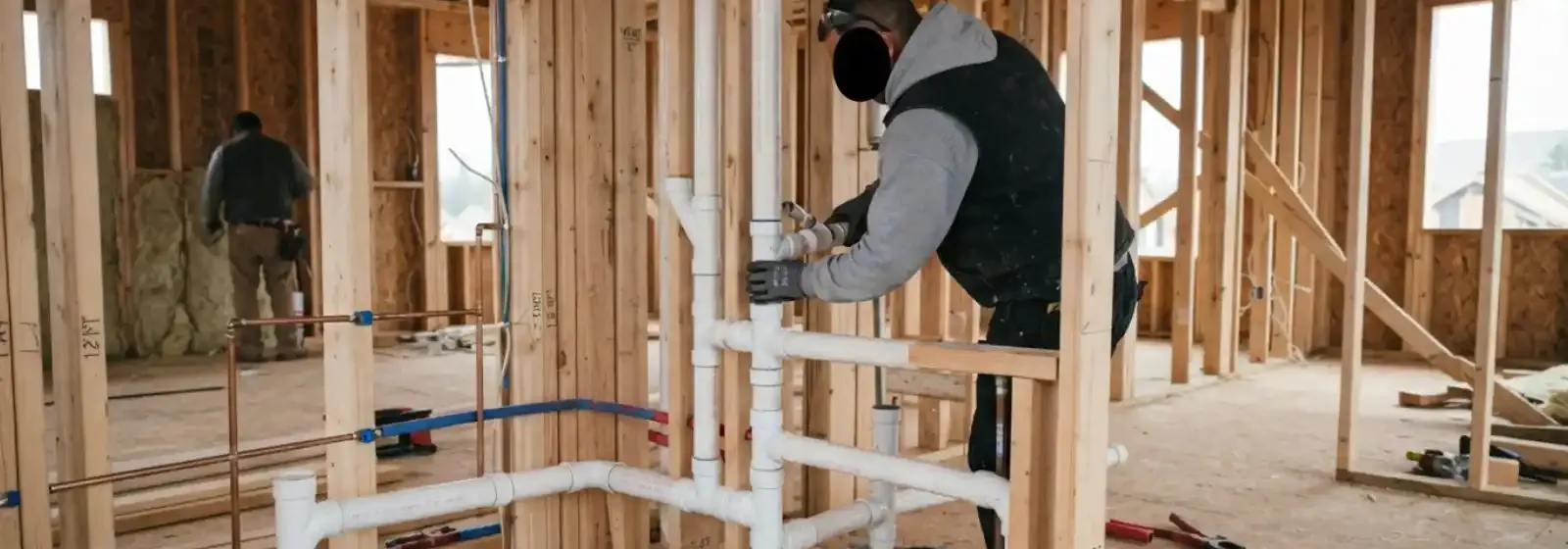
Decide the tub type before you cut anything
Alcove tub
Fits between three walls and is the simplest rough-in. The drain sits at one end and the valve and spout on the long wall.
Drop-in tub
Sits in a framed deck. The deck hides the plumbing, so you can place the faucet on the deck or the wall.
Freestanding tub
Needs a floor-mounted or wall-mounted filler and a carefully located drain. Floor-mounted fillers require supply lines through the floor.
Walk-in or soaking tub
Often has a deeper basin and a door, so the drain, overflow and valve layout follow the manufacturer's sheet exactly.
Get the manufacturer's rough-in drawing before you frame. It shows the drain center, the overflow position and the minimum clearances, and those numbers do not move once the tub is in. A drain that lands two inches off can mean cutting a joist or chasing a new pipe path.
The drain, overflow and trap
A bathtub drains through a waste and overflow assembly: the overflow collects water from the upper opening, the drain shoe collects it from the bottom and both join into a trap beneath the tub. The trap holds a plug of water that blocks sewer gas, and most residential tub traps use 1.5 inch pipe.
Slope matters as much as size. A tub waste needs a steady downhill run to the stack, and a flat or backward run is how tubs end up draining slowly from day one. Where the tub sits over a basement ceiling, the trap is reached from below, and on a slab floor it is set in the concrete before the tub arrives.
Rough-in steps in order
- 1
Set the drain and trap
Locate the drain from the tub's rough-in sheet, set the trap and connect it to the waste line. Pour a fresh test with water to confirm there are no seeps.
- 2
Run the supply lines
Install hot and cold supply to the valve location, with shutoffs reachable from an access panel or the basement.
- 3
Mount the valve at the right depth
Anchor the valve body to blocking so it does not flex. Its depth must match the trim kit, and it is set to the finished wall thickness, not the stud.
- 4
Test before the wall closes
Plug the drain, fill the tub, check the overflow, then pressure-test the supply lines. Only then does drywall or tile go up.
- 5
Install the tub and trim
Set the tub on its support, connect the waste and overflow, then fit the spout and handle trim.
The access panel decision
The valve and trap are the two parts most likely to need work in the future. A removable panel behind the valve wall or a basement ceiling opening costs little to include now and saves cutting tile later.
If the bathroom sits over a finished space, ask the plumber how the trap will be reached before you approve the layout.
Venting and why it matters for tub drainage
Every drain trap needs a vent so air can enter behind the draining water. Without it, the draining tub can siphon its own trap dry or gurgle as the pipe fights for air. The Pennsylvania Uniform Construction Code adopts the International Plumbing Code and International Residential Code plumbing provisions, and those codes set the vent rules, so the layout has to be done to that standard.
In older homes a tub may drain into a vent or stack that cannot be changed easily. That is one of the reasons we look at the existing plumbing installation layout before we quote.
Planning a tub swap or new bath?
We look at the drain, the vent and the access before we give you a clear price. Call (215) 714-6692.
What affects the cost of a bathtub plumbing installation
What affects the price of bathtub plumbing installation
The tub and trim are only part of the price. These are the variables on the plumbing side.
Tub type and drain position
Moving a drain or adding a floor-mounted filler means more cutting and piping than a like-for-like swap.
Floor type and access
A basement ceiling below makes work easier. A slab means cutting concrete and a longer job.
Valve and trim choice
Pressure-balancing and thermostatic valves cost more than basic ones, and fancy trim adds parts.
Condition of existing pipes
Corroded supply lines or a damaged waste may need replacing before the tub goes in.
Permit and inspection
Plumbing permits and inspections may apply, so ask the Township office what your project needs.
Water damage from an installation mistake can be expensive, so ask whether your plumber tests before close-up. Want your real number? Call (215) 714-6692.
Signs the tub plumbing needs work before a remodel
Look for these before you buy a new tub
- Slow draining even after the tub is cleaned
- Gurgling from the tub when a toilet flushes
- Stained ceiling below the bath
- A spongy floor near the tub
- Weak hot water or a handle that will not shut off fully
- Greenish or rusty stains around the spout
If a clogged tub drain keeps coming back, drain cleaning can clear the line and a camera can show whether the pipe needs replacing before you spend money on a new fixture.
Hard water in Horsham: what the local record says
The Horsham Water and Sewer Authority publishes a hardness page that puts local water at roughly 200 to 350 mg/L as calcium carbonate, with an average of about 275 mg/L, or around 16 grains per gallon. That is hard water by common standards, and it leaves scale on spouts, aerators and the cartridge inside a shower valve.
The tie to your tub project is practical. Pick a valve with a replaceable cartridge and trim that you can descale, and plan an access panel so a cartridge swap does not mean opening a wall. If you add a water softener, the Authority notes that its installation instructions may ask you to enter the incoming hardness number.
The Authority's 2024 water quality report lists 15 wells in the township and mentions an interconnection with North Wales Water Authority, so hardness can vary by area. Test your tap if you want a number for your own home.
Permit rules vary by project, so ask the Horsham Township code enforcement office whether a tub replacement or rough-in change needs a plumbing permit.
Questions and answers
Yes. The Authority's hardness page puts local water around 200 to 350 mg/L, which leaves scale on spouts and shower valve cartridges over time. Choose a serviceable valve, wipe down trim and plan access for future cartridge work.
A like-for-like tub swap can fit into a day or two, while moving drains, cutting concrete or adding a valve takes longer. We do not promise a fixed time before we see the space.
Permit rules vary by project, so ask the Horsham Township code enforcement office. A like-for-like replacement is different from moving the drain or valve.
Setting a tub is heavy, awkward work, and the plumbing behind the wall is hard to fix after it closes. Many homeowners handle demolition and tile, then hire a plumber for the rough-in and test.
Common causes are low slope on the waste line, a missing vent or a partly blocked trap. A plumber can test each, starting with the vent and the pitch.
Yes. We also serve Ambler and Maple Glen, where water hardness and permit offices can differ from Horsham, so we check locally before we start.
Sources we checked
Local facts on this page come from these public pages. Plumbing work in Pennsylvania falls under the Uniform Construction Code, which adopts the International Plumbing Code (IPC) provisions, so ask Horsham Code Enforcement which edition applies before a permit is pulled. Rules and phone numbers change, so confirm with the office before you act.
- horshamwater-sewer.com/hardness Authority report
- horshamwater-sewer.com/sites/default/files/2025-07/2024_consumer_co... Authority report
- horsham.org/10499/code-enforcement Township page